
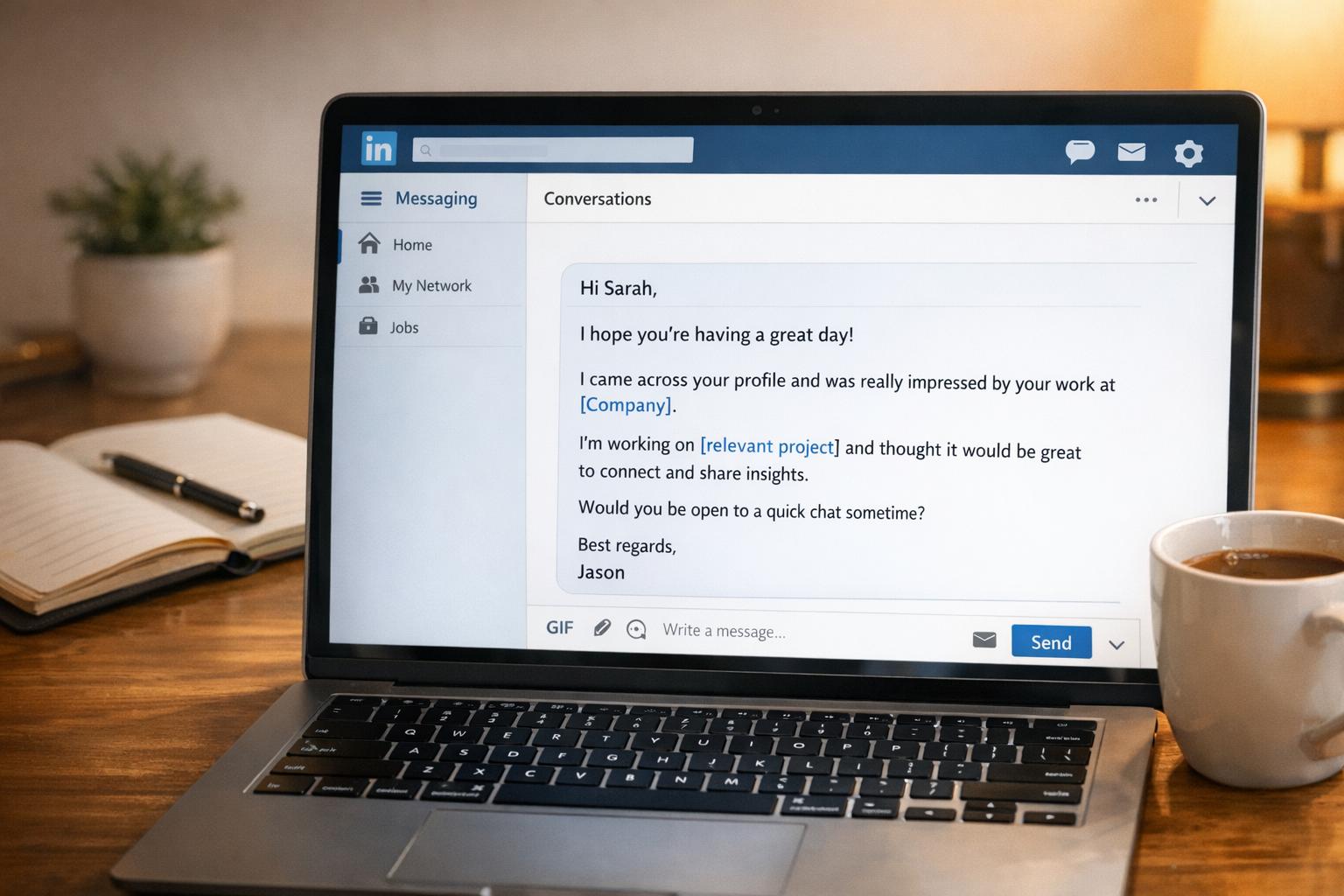
LinkedIn is a powerhouse for B2B outreach, with nearly 1 billion users and 80% of high-quality leads originating from the platform. Unlike emails, LinkedIn messages allow recipients to verify your professional profile instantly, making them twice as effective. With tools like AI-driven platforms, you can scale personalized outreach while maintaining relevance. Below are 10 LinkedIn messaging strategies proven to boost reply rates up to 40%:
- Personalized Connection Requests: Reference mutual connections, recent posts, or company milestones.
- Search Visibility Messages: Highlight when their profile frequently appears in your results.
- Content-Based Engagement: Mention and engage with their posts or shared content.
- Mutual Connection References: Build trust by naming shared contacts.
- Free Resources: Offer helpful guides or tools tailored to their challenges.
- Problem-Solution Questions: Ask specific, role-related pain points.
- Follow-Up with Value: Provide resources in follow-ups to keep the conversation alive.
- Direct Value Offers: Lead with a clear, relevant benefit addressing their needs.
- Data-Driven Insights: Share industry stats or insights tied to their business.
- AI Tools for Scaling: Platforms like Closely automate message personalization, research, and follow-ups.
Key Tips:
- Keep messages under 400 characters for higher reply rates.
- Send requests on Mondays at 10:00 AM for better acceptance.
- Follow best practices for AI-powered outreach to streamline research and maintain a personal touch.
These templates and strategies focus on delivering value upfront, ensuring your outreach stands out in a crowded inbox.

LinkedIn Cold Outreach Statistics and Best Practices for 40% Reply Rates
These 3 LinkedIn message templates that brought our customers $$$ [in-depth analysis]
sbb-itb-8725941
1. Targeted Prospect Connection Request
When it comes to LinkedIn outreach, focusing on your prospect’s unique situation rather than pushing your agenda can make all the difference.
A targeted connection request shows prospects you’ve taken the time to understand their context. Jack Reamer, CEO of Salesbread, explains this approach perfectly:
"Prospects know when you have sent the same spammy message to hundreds of other people in your network. In a way, most people have spam filters built into their minds which makes them ignore anything that doesn’t look personal." [9]
The key to standing out? Use the CCQ Method – Compliment, Commonalities, Questions – to craft messages that feel personal and relevant. Top-performing sales reps dedicate over 10 minutes to tailoring each message, referencing recent posts, shared connections, or company milestones. They follow the 90/10 rule: make 90% of the message about the prospect and just 10% about yourself for context [10] [9]. This thoughtful approach can lead to impressive results.
Personalized connection requests boast a 45% acceptance rate and a 19.98% reply rate [9] [2].
Personalization Level
Personalization is the backbone of effective outreach. Mention something specific from the prospect’s LinkedIn profile – like a recent post, a mutual connection, or a company achievement. Stick to the 90/10 rule to keep the focus on them. This technique not only grabs attention but also builds trust [9].
Scaling with AI Tools
AI tools can help you scale personalized outreach without losing the human touch. By analyzing LinkedIn profiles, recent posts, or company updates, these tools can generate tailored icebreakers. Simply upload a CSV of prospects, and AI can create opening lines based on their "About" sections or recent activity [10] [11]. For best results, keep your messages under 400 characters – shorter messages generate 22% more replies than longer ones [6]. This approach allows you to maintain quality while reaching more people efficiently.
Boosting Reply Rates
When done right, personalization doesn’t just get replies – it gets results. Nearly half of replying prospects agree to a meeting [9] [2]. Timing is another important factor: sending connection requests on Mondays at 10:00 AM yields the highest acceptance rates [2]. To further improve your chances, engage with the prospect’s content beforehand – like or comment on their posts to stand out in their notifications [12]. These small actions can help your message cut through the noise [9].
2. Search Results Visibility Request
A simple way to spark interest without being overly pushy is to reference a prospect’s top position in your search results. Jack Reamer, CEO of SalesBread, provides a great example of how to do this effectively:
"LinkedIn showed me your profile multiple times now, so I checked what you do. I really like your work and as we are both in the creative industry – I thought I’ll reach out." [9]
This type of message stands out because it feels personal and genuine, breaking through the noise of typical outreach. Let’s take a closer look at how to execute this strategy with minimal effort while staying within LinkedIn’s character limits and leveraging AI for personalization.
Ease of Implementation
LinkedIn limits connection requests to 300 characters [13], so brevity is key. Focus on the discovery aspect to craft a concise and engaging message. Maksim Grigoryev, Product Marketing Lead at GetProspect, suggests another effective approach:
"I noticed your LinkedIn profile floated on top of search results for the sales industry. I would really appreciate talking more about sales with an expert of your level." [13]
Don’t forget to polish your own profile – prospects will likely review it before accepting your request. To stay under the radar of spam filters, aim to send 20–25 connection requests per day [2]. This method not only helps you connect meaningfully but also prepares you for scaling your outreach efforts.
Scalability Using AI Tools
AI tools can make scaling this approach easier while keeping the human touch intact. These tools can analyze a prospect’s profile and activity to craft personalized opening lines based on their search visibility [11]. However, the secret to success lies in striking the right balance: let AI handle the groundwork like drafting and sequencing, but always review and refine the messages yourself. To avoid overwhelming your prospects, space out follow-ups with at least two days between messages [6].
3. Shared Post Interest
Mentioning a prospect’s LinkedIn post is a simple way to create a connection and show that you’re tuned in to what matters to them. Instead of relying on a generic message, dive into a topic they’ve shared and start a meaningful conversation. Why does this work? Because it feels genuine and engaging, not like a sales pitch. This thoughtful approach lays the groundwork for more focused, relevant communication.
Personalization Level
This strategy is all about personalization. But don’t settle for vague comments like, "I liked your post." Go deeper. Highlight something specific, such as, "I really liked your point about balancing automation with the human touch" [7]. This level of detail shows you’ve not only read their post but also taken the time to reflect on it.
Ease of Implementation
Admittedly, this takes effort. You’ll need to find and read posts that resonate with your goals. However, the payoff is worth it – LinkedIn messages typically achieve open rates of 20% to 25% [7], far higher than cold emails. Keep your message concise, around 300–500 characters, and structure it with short, 1–2 sentence paragraphs [7]. Focus on one key takeaway from their post and include a follow-up question to keep the conversation flowing. If time is a concern, AI tools can help scale this process while maintaining a personal touch.
Scalability Using AI Tools
AI tools can streamline this approach by identifying prospects who’ve interacted with specific industry-related posts. These tools can compile lists of users who’ve liked or commented on trending content, giving you a ready-made pool of engaged prospects. Automation can handle tasks like prospect identification and drafting initial messages, but make sure to review and tweak each message to keep it authentic and relevant. The balance between efficiency and personalization is key to making this strategy work.
4. Mutual Connection Reference
When it comes to making your outreach more personal, referencing mutual connections can work wonders for building trust. Mentioning someone you both know transforms a cold message into something far more inviting. Instead of feeling like a random stranger reaching out, you gain instant credibility through that shared connection. This "trust transfer" helps your message feel more like a referral, which naturally makes it more approachable and less like a sales pitch [14]. Just like other personalized approaches, this technique strengthens your credibility and can significantly improve response rates.
Personalization Level
For this to work, it’s crucial to name the mutual connection directly. For example, you might say: "Sarah and I worked together at Microsoft" or "Tom mentioned you’re leading the digital transformation at your company." These small but specific details show that you’ve done your homework, and they instantly lend you more credibility [7]. Research even shows that referencing a mutual connection in a LinkedIn invite can double your acceptance rates [1].
Ease of Implementation
LinkedIn makes this process straightforward by displaying mutual connections on profiles. To craft an engaging message, try the CCQ method – compliment, reference the shared contact, and ask a question. This approach not only grabs attention but also encourages a response [7] [9].
Scalability Using AI Tools
Automation tools can simplify this process by pulling mutual connection details directly into your templates using placeholders like {{mutualConnectionName}} [1]. While these tools are excellent for streamlining lead research and message preparation, it’s essential to review each message to ensure it feels authentic. A well-balanced approach that combines automation with a personal touch is key to making this strategy work effectively at scale. By integrating mutual connection references into your outreach, you can add a layer of personalization that aligns seamlessly with your broader strategy.
5. Free Resource Share
Sharing a free resource as part of your LinkedIn outreach is a smart way to shift the focus of your message. Instead of sounding like a sales pitch, it positions you as someone offering genuine help. This approach feels more like doing a favor than making a transaction, which reduces sales pressure and encourages more engagement from prospects [6].
Personalization Level
Just like other outreach methods, personalization is the linchpin here. It’s not enough to send a generic PDF or guide – you need to explain why this resource is relevant to the recipient. Tie it to their role, a recent company milestone, or a challenge they might be facing. For example, if their company just launched a new product, you could share a case study showing how others improved trial conversions after similar launches. By tailoring the resource to their specific situation, you turn your message from something forgettable into something genuinely helpful [6].
Ease of Implementation
One of the best things about this strategy is that a high-quality resource – like a guide, calculator, or research report – can be reused across multiple campaigns. All it takes is a few tweaks to your message template to keep it fresh. The "soft opt-in" approach works particularly well here. Instead of dropping a link right away, ask the prospect if they’d like to see the resource. A simple question like, "Would you be interested in checking this out?" gives them control and makes them more likely to respond [6].
Scalability Using AI Tools
LinkedIn automation tools can make this process even smoother by helping you identify prospects and send personalized messages at scale. Adding a creative touch, like a personalized image or GIF with the prospect’s company logo or photo, can make your outreach stand out. Skylead used this tactic and achieved a 76% response rate, generating 320 bookings for a client. This shows how combining automation with resource sharing can significantly boost engagement [1].
Effectiveness in Driving Replies
This approach frames you as a helpful peer rather than a pushy salesperson. As Jenny Romanchuk from Artisan explains:
"It’s essentially free value. There’s no catch, which makes it more likely to be received as a favor, not a sales pitch" [6].
The key is to focus on specific, actionable resources that address real problems. Avoid broad or generic content like "6 digital marketing trends." The more targeted and relevant your resource, the better your chances of getting a reply [3].
6. Problem-Solution Question
A problem-solution question is a powerful way to engage prospects on LinkedIn by inviting them to share the challenges they face. This approach builds on earlier methods of establishing a connection by showing genuine interest in their specific issues. By asking about a particular challenge, you not only spark curiosity but also position yourself as a consultant, which lowers resistance and encourages responses [14][6].
Personalization Level
The effectiveness of this approach lies in personalization. Vague questions like "How’s business?" won’t cut it. Instead, tie your question to something specific about the prospect’s company, role, or industry. For instance, if you’re reaching out to a VP of Sales at a rapidly growing SaaS company, you might ask: "How is [Company Name] managing onboarding for your expanding sales team?" This kind of targeted question demonstrates that you’ve done your research and understand their unique challenges [14][7].
Ease of Implementation
While this strategy requires some upfront research, it becomes easier with preparation. Start by identifying common pain points within your target audience. From there, you can create templates that address these challenges while allowing for personalization. For example, you can swap in specific details like company names or industry-specific issues. This approach ensures your outreach feels tailored while maintaining efficiency [14][7].
Scalability Using AI Tools
Thanks to LinkedIn message automation, scaling this strategy is straightforward. Tools that use dynamic variables – like {painPoint} or {currentCompany} – let you personalize messages at scale without losing relevance. Research supports this method: LinkedIn messages using a "Question Hook" or "Problem-Solution" framework have achieved response rates between 35% and 37% [1]. Additionally, timing matters – scheduling outreach on Mondays at 10:00 AM has been shown to yield the best acceptance rates [2].
Effectiveness in Driving Replies
This method encourages prospects to share their challenges, fostering a dialogue without the pressure of committing to a call. As Skylead notes:
"By posing a question in your cold LinkedIn outreach, you give your leads a chance to talk a bit about themselves, and you can learn a bit more about their work" [1].
Instead of pushing for a call right away, keep the tone light and conversational. Use soft closing lines like "Would love to hear your thoughts" to maintain a low-pressure environment. This keeps the focus on understanding their needs before presenting a solution [6].
7. Recent Content Comment
Engaging with a prospect’s recent post before reaching out can make your connection feel more natural and less like a cold pitch. By referencing something they’ve shared, you’re not only acknowledging their expertise but also creating a bridge for meaningful interaction. This approach works because it shows genuine interest in their work, making them more likely to respond positively [15][7]. It also ties in well with other personalized outreach strategies we’ve covered.
Personalization Level
The more tailored your outreach, the better your chances of success. Take Margaret Sikora from Woodpecker as an example. In January 2025, she reached out to 22 industry experts by referencing specific comments they made on platforms like Quora or in their articles. Her effort paid off with a 50% reply rate [15]. As Sikora explained:
"The 50% reply rate comes from the quality of the outreach, not the quantity of prospects I reached out to." [15]
The takeaway? Specificity matters. Instead of a vague compliment like, "I enjoyed your post", highlight a particular insight or quote that resonated with you. This approach demonstrates that you’ve truly engaged with their content, making your outreach feel thoughtful and sincere.
Ease of Implementation
Although this strategy takes more time per prospect, it’s simple to execute. Start by identifying LinkedIn users who actively share posts. Take a few minutes to read their content, then leave a thoughtful comment before sending your connection request. Using the CCQ formula – Compliment, Comment, Question – can further enhance engagement. In fact, personalized LinkedIn InMails have been shown to achieve a response rate 166% higher than generic messages [8].
Even when scaling your efforts, it’s possible to maintain a personal touch without overextending yourself.
Scalability Using AI Tools
If you’re looking to scale this method, a hybrid approach can help. Use tools that allow you to add custom variables, like {cs_opener}, to your lead list. This lets you jot down a brief, tailored note about each prospect’s content. Additionally, automation tools with snippet features can save comment templates that you can quickly insert with keyboard shortcuts. This way, you can streamline your outreach while keeping it personalized [7][8].
Effectiveness in Driving Replies
This strategy shines because it gives your message a clear and personal purpose, helping it stand out in a sea of generic outreach attempts. The professional nature of LinkedIn amplifies this effect, increasing the likelihood of a positive response [7]. By anchoring your message in genuine engagement, you’re not just reaching out – you’re starting a conversation that matters.
8. Direct Value Offer
A direct value offer cuts straight to the point, giving prospects a clear reason to respond. Instead of starting with small talk, lead with something that directly addresses their pain points – whether it’s a free resource, a research report, or a tool. Presenting your message as a helpful gesture, rather than a sales pitch, can make a big difference. This approach is designed to grab attention and has been shown to drive reply rates as high as 40%.
Personalization Level
The key to success here is personalization. The most impactful offers are those that feel tailor-made for the recipient. This requires doing a bit of homework on your prospect before reaching out. For example, Salesbread reported achieving a 48.14% positive reply rate by using the CCQ method in 2025 [2]. Instead of overwhelming prospects with a laundry list of features, focus on one specific value proposition that directly addresses their current challenge. When your offer feels relevant and timely, it’s much more likely to bypass mental spam filters [9].
Ease of Implementation
Once you’ve identified the value you can bring, this strategy is relatively simple to execute. Keep your message concise – under 400 characters. Research shows that shorter InMails receive 22% more replies than longer ones [6]. Use a low-pressure call-to-action, like “Let me know if you’d like more details,” rather than immediately pushing for a meeting or call [6]. Offering something useful without strings attached keeps the tone approachable and makes it easier to scale this method consistently.
Scalability Using AI Tools
AI tools can make this approach even more efficient. They can handle tasks like identifying prospects who would benefit most from your offer, automating lead research, and qualifying leads based on your Ideal Customer Profile [4]. On top of that, AI can create personalized images or GIFs featuring the recipient’s profile photo or company logo, which has been shown to boost response rates to as high as 76% in certain campaigns [1]. Real-time data enrichment, like updates on company news or job changes, allows you to craft offers that are even more relevant [4][5]. Coordinated outreach across multiple channels has also proven to increase engagement by 40% while reducing cost-per-lead by 31% [5]. With these tools, scaling personalized value offers becomes much more manageable.
Effectiveness in Driving Replies
This strategy works because it positions you as a helpful partner rather than a pushy salesperson. Direct value offers consistently improve response rates. For example, sales teams that focus on social selling through LinkedIn are 51% more likely to hit their sales targets [6]. The professional setting of LinkedIn amplifies the effectiveness of a value-first approach, making prospects more open to continuing the conversation. By leading with value, you not only stand out but also build trust right from the start.
9. Data-Driven Insight
When it comes to personalized outreach, leveraging data-driven insights can make your messages stand out. Including a carefully selected statistic, trend, or piece of competitive intelligence shows your prospect that you understand their business and industry. Instead of relying on vague statements, reference specific data that directly aligns with their challenges or goals. This approach not only demonstrates effort but also builds trust – after all, messages tailored with data-driven personalization can achieve response rates up to 312% higher than generic ones [16].
Personalization Level
The key to successful data-driven messaging lies in referencing specific company events or triggers. Think recent funding rounds, new hires, product launches, or shifts in their market [16][5]. For example, if a company has just closed a Series B funding round, you could highlight how similar organizations invest new resources. Pair this with insights like recent profile views or industry activity to ensure your timing is spot on [6][16]. Additionally, referencing something unique – a point from a recent blog post or webinar – reinforces that your outreach isn’t automated or generic [6][2].
Ease of Implementation
Adopting this strategy does take some effort, as it relies on staying current with relevant data. Tools like LinkedIn Sales Navigator can simplify the process by helping you track profile views and company updates. For instance, reaching out to someone who’s viewed your profile in the last 24 hours can indicate mutual interest [1]. Keep your message short and focused – highlight one compelling data point to make an impression. Once you’ve mastered this, AI sales prospecting tools can help scale these efforts further.
Scalability Using AI Tools
AI tools make it easier to scale personalized outreach without losing the human touch. They can monitor trends in a prospect’s industry, track company news, and even suggest content angles that align with recent developments [16]. With real-time data enrichment, you can quickly reference updates like job changes, funding announcements, or product launches as they happen [5]. It’s no wonder that AI-assisted outreach can boost response rates by 340% [16].
Effectiveness in Driving Replies
This approach combines precision and efficiency, positioning you as a knowledgeable partner rather than just another salesperson. Leading with a relevant insight grabs attention and builds credibility right away. On LinkedIn, personalized messages can double reply rates compared to cold emails [5], and adding a tailored note based on profile activity can increase connection acceptance rates by 30% to 40% [5]. Considering that 80% of high-quality B2B leads come from LinkedIn, it’s clear that data-driven outreach on this platform can yield impressive results [5].
10. Follow-Up with Resource
When it comes to LinkedIn conversations, follow-ups are often the key to turning a prospect into a response. Believe it or not, 50% to 70% of total responses in outreach campaigns come from follow-up messages – most replies land after the second or third nudge [5]. The secret to an effective follow-up? Offering genuine value. Sharing a relevant resource shifts your message from a routine check-in to a thoughtful gesture that prospects can truly appreciate. This approach builds on your initial outreach, keeping the conversation alive and meaningful. It is a critical step in building a LinkedIn outreach funnel that consistently converts.
Personalization Matters
Personalization isn’t just for your initial message – it’s equally important for follow-ups. The resource you share should directly address the prospect’s role, industry, or a specific challenge they’ve mentioned. Generic content won’t cut it. For instance, if a VP of Sales recently posted about struggles with pipeline visibility, sending a guide or template on improving forecasting accuracy shows you’re paying attention. Using language like “no strings attached” can also reduce hesitation and position you as a trusted, helpful expert [14].
Timing and Simplicity
Timing your follow-ups is just as important as crafting them. Studies show that sending a follow-up increases your chances of a response by 25% [1]. To strike the right balance, wait at least two to five days after your initial message before following up [6]. And to make things easier, have a library of high-quality resources – like templates or research reports – ready to share with different prospect segments. This preparation ensures you’re always equipped to deliver value without scrambling for content.
Scaling with AI
AI tools can help you scale resource-based follow-ups without sacrificing the personal touch. These platforms can automate sequences with dynamic placeholders to insert the right resource link for each prospect. Plus, they’re smart enough to pause sequences when someone replies, so you can jump in with a timely, human response [17][2]. Even a well-crafted “break-up” message – the final follow-up – can work wonders. For example, CloselyHQ shared a case where including a Facebook community link in their break-up message led to over 50% of recipients clicking the link, with most of them joining the group [3].
Why It Works
Resource-focused follow-ups aren’t just about persistence – they’re about demonstrating your commitment to providing value. This approach taps into the principle of psychological reciprocity: when you offer something helpful for free, people feel more inclined to respond or engage. By giving prospects a clear reason to continue the conversation, you move beyond routine outreach and into meaningful dialogue. Considering that personalized LinkedIn messages yield 2× higher reply rates than cold emails [5], combining this with a value-first mindset can be incredibly effective. And remember, 50% of sales happen after the fifth follow-up [17][5]. Persistence, when paired with genuine helpfulness, can make all the difference in achieving long-term success.
How to Improve Results with Closely

Leveraging personalized LinkedIn templates is a proven way to boost outreach, and Closely takes this to the next level by adding automation and AI-driven personalization.
Closely combines automation with a personal touch, using Sales AI Agents to handle the heavy lifting. These agents research leads, qualify them based on company activity, and craft context-aware personalized messages tailored to each prospect’s business needs [4]. Instead of sending generic templates, you’re delivering messages that feel custom-made for each recipient.
Another standout feature is Closely’s ability to manage multichannel campaigns. It seamlessly coordinates outreach across LinkedIn and email, creating automated sequences that increase engagement while reducing the cost-per-lead [5]. Features like data enrichment keep your contact information up-to-date, while lead scoring ensures you’re focusing on high-intent prospects [4]. This integration enhances the personalization strategies already discussed.
Here’s a practical edge: Closely can bypass LinkedIn’s standard 100-connection-request-per-week limit by using a prospect’s email address to send connection requests [3]. Its built-in CRM inbox lets you manage conversations, tag leads, and track responses effortlessly. By combining Closely’s automation with personalized templates, users have reported reply rates as high as 55% – a huge jump from the average 10% for LinkedIn InMails [5].
For those looking to save, promo codes like BLACKFRIDAY20 (20% off) and XMAS15 (15% off) can make Closely’s plans even more affordable [4]. Here’s a quick breakdown of the plans:
- Starter Plan: $49/month, includes 1 LinkedIn account and 1,000 credits (enough for 250 emails, 50 phone lookups, or 500 AI personalizations).
- Growth Plan: $127/month, supports 3 LinkedIn accounts and 3,000 credits.
- Essential Plan: $205/month, offers 5 LinkedIn accounts and 5,000 credits.
- Custom Plan: Starting at $350/month, designed for larger teams with 10 LinkedIn accounts and flexible credit options.
These plans make scaling your outreach strategies both effective and budget-friendly.
Don’t forget to optimize your LinkedIn profile. A professional photo, a compelling headline, and a clear "About" section help establish trust with prospects [3][2]. Start by warming up your account with a few messages weekly, then gradually scale up. With Closely handling repetitive tasks, you can focus on building meaningful conversations that drive results. These tools, paired with targeted messaging, ensure your outreach efforts are both efficient and impactful.
Conclusion
Reaching a 40% reply rate on LinkedIn comes down to three key elements: personalization, continuous testing, and using the right tools. The templates shared here are a great starting point, but to make them work, you’ll need to tailor them to your audience. Dive into each prospect’s recent activity, challenges, and business goals to craft messages that feel personal and relevant.
The backbone of successful outreach is understanding your prospect’s needs and making your message all about them. Keep it short and to the point – concise messages are far more engaging than lengthy ones.
Testing is where the magic happens. Experiment with at least five versions of each template and track which ones perform best across different audience segments. Tools like Closely can simplify this process with AI-powered personalization and multichannel automation, such as LinkedIn drip campaigns, freeing you up to focus on fine-tuning your LinkedIn prospecting strategies and fostering genuine conversations.
FAQs
What’s the best way to personalize LinkedIn messages to get more replies?
Personalization is the secret to making your LinkedIn messages stand out and feel meaningful. Start by referencing something specific about the recipient, like a recent post they shared, a job change, or a company milestone. For example: "I noticed your recent post about expanding your sales team at [Company], and it reminded me of some challenges we’ve helped similar companies overcome." This shows you’ve done your homework and gives them a reason to engage.
Next, customize your message to their role and industry. Use their first name, and if possible, mention shared connections or interests. For example: "Hi [First Name], I’m always eager to connect with leaders in [Industry]. We recently helped [Similar Company] cut their sales ramp time by 30%, and I’d love to explore whether we could achieve something similar for your team." Keep your call-to-action straightforward, like requesting a quick 5-minute chat.
Lastly, steer clear of generic templates. Add a personal touch by complimenting something they’ve accomplished, referencing a shared background, or commenting on a recent post or achievement. A well-thought-out and tailored message is far more likely to catch their attention than a cookie-cutter approach.
How can AI tools help scale LinkedIn outreach effectively?
AI tools have revolutionized the way LinkedIn outreach is scaled. They make it possible to run high-volume, tailored campaigns by automating tasks like crafting personalized messages, scheduling posts at the best times, and managing follow-up sequences. What used to take hours of manual effort can now be accomplished in just minutes, allowing you to connect with a larger audience without losing that personal touch.
These tools also provide real-time analysis of responses, giving you the ability to tweak your messaging or adjust your value propositions to maintain strong reply rates. By taking over repetitive tasks like prospecting and qualifying leads, AI frees up your team to focus on strategy and building genuine relationships, making your outreach efforts both more efficient and impactful.
Why does timing matter when sending LinkedIn connection requests?
Timing is everything when it comes to sending LinkedIn connection requests. Reaching out when your prospect is actively engaging on the platform – like right after they post an update or share a major announcement – can make your request stand out. These moments of activity are prime opportunities to ensure your message gets noticed and acted upon.
Equally important is following up quickly after your initial request. A prompt follow-up keeps the conversation fresh in their mind and shows you’re genuinely interested. By syncing your outreach with their activity and responding without delay, you not only build trust but also prevent your message from getting buried in their inbox. This approach can significantly improve your chances of getting a reply.